

Low Platelet Count (Thrombocytopenia): Symptoms, Causes & Treatment in Kuala Lumpur, Malaysia
Low Platelet Count and What It Means for Your Health
A blood test shows that your platelet count is low. You may feel well, or you may have noticed unexplained bruising, bleeding gums or heavier periods. The result can be worrying, especially if you do not know what platelets do or why their number has fallen.
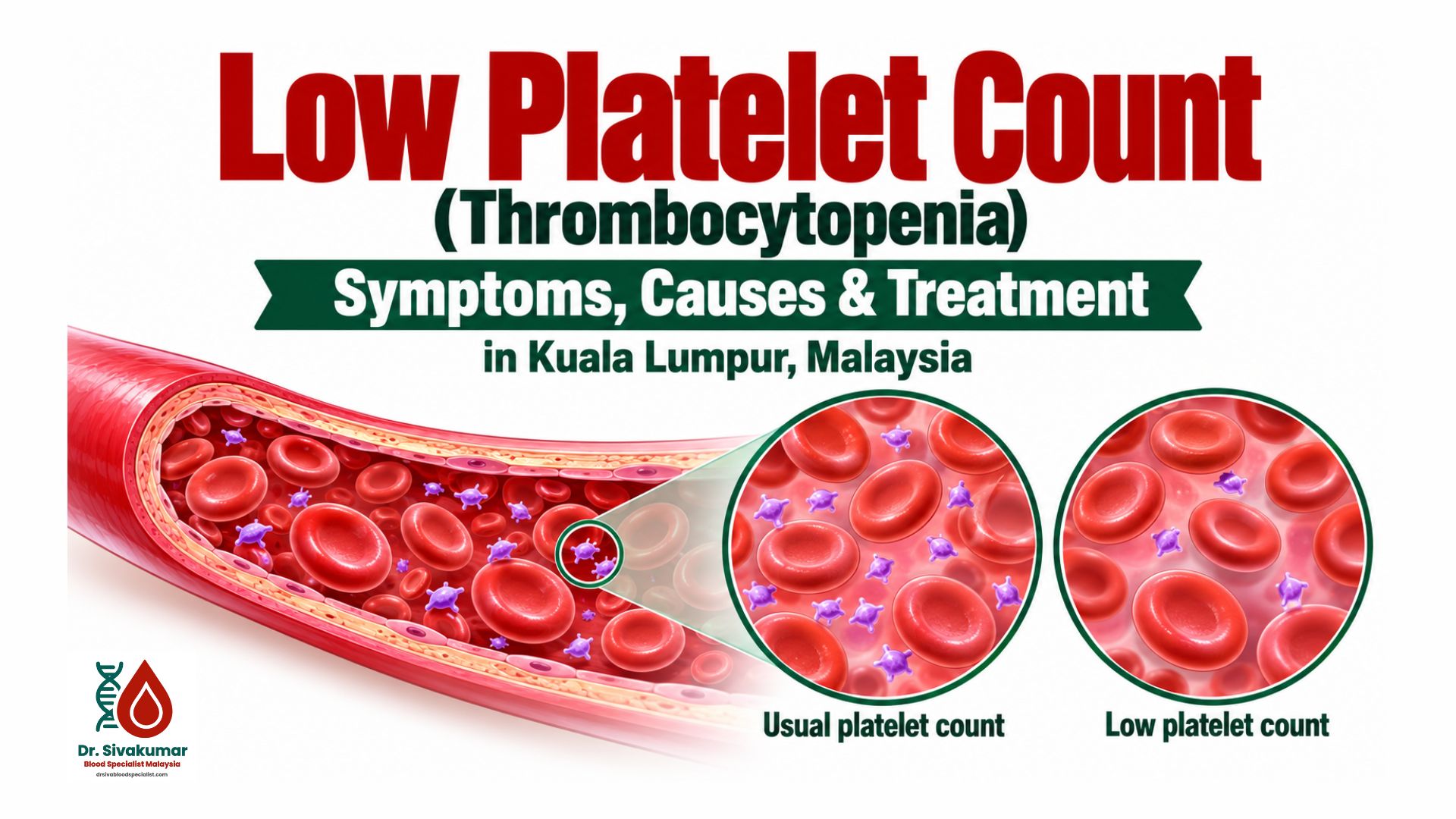
Low platelet count is called thrombocytopenia. Platelets are small blood cell fragments that help stop bleeding. When a blood vessel is injured, they gather at the damaged area and help form a plug. If there are too few platelets, bleeding may take longer to stop.
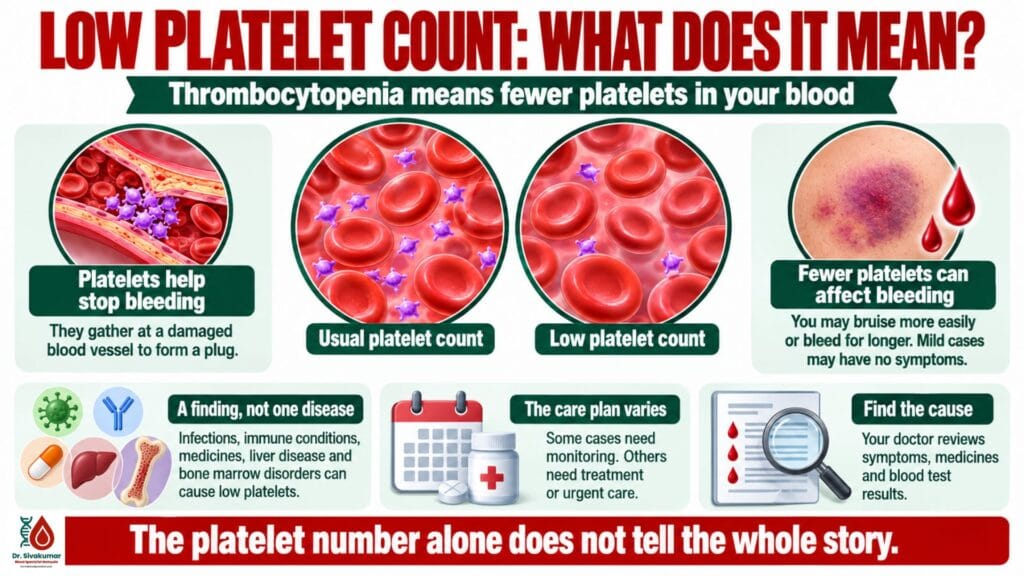
Thrombocytopenia describes a blood test finding, rather than one single disease. Possible causes include infections, immune conditions, medicines, liver disease and disorders affecting the bone marrow. Some cases are temporary and need monitoring. Others require treatment or urgent hospital care.
This article explains how to understand your platelet result, recognise warning signs and prepare for specialist assessment. Dr Sivakumar Palaniappan is a Consultant Haematologist at Pantai Hospital Kuala Lumpur. A haematology consultation can help establish the cause and guide a suitable care plan.
What Are Platelets and What Do They Do?
Blood contains a liquid called plasma, along with red blood cells, white blood cells and platelets. Each has a different role. Red blood cells carry oxygen around the body. White blood cells help fight infections. Platelets help stop bleeding.
Platelets are tiny cell fragments made in the bone marrow, the soft tissue inside bones. They circulate in the bloodstream, ready to respond when a blood vessel is damaged.
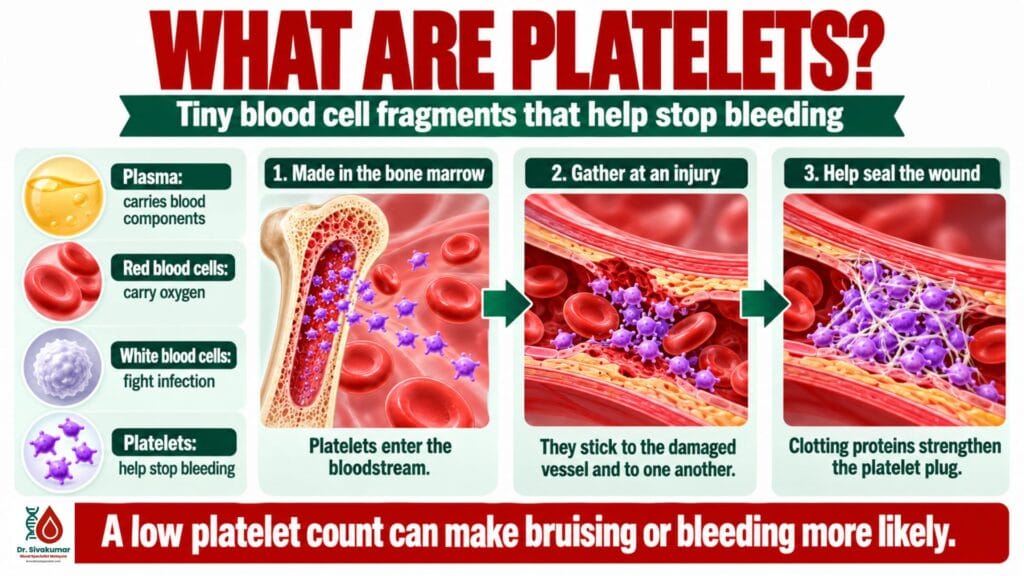
For example, when you cut your finger, platelets gather at the injured area. They stick to the damaged blood vessel and to one another, forming an initial plug. Clotting proteins in the blood then help strengthen this plug to seal the wound.
When your platelet count is too low, this process may become less effective. You may bruise more easily or bleed for longer after an injury. However, a mildly low count may cause no noticeable symptoms.
Platelet numbers are measured as part of a full blood count, alongside red and white blood cells. These results help doctors assess your blood health.
Frequently Asked Questions About Thrombocytopenia (Low Platelet Count)
A low platelet result can raise questions about your health, daily activities and whether treatment is needed. These answers address some common concerns before we look at the condition in more detail.
What is a normal platelet count?
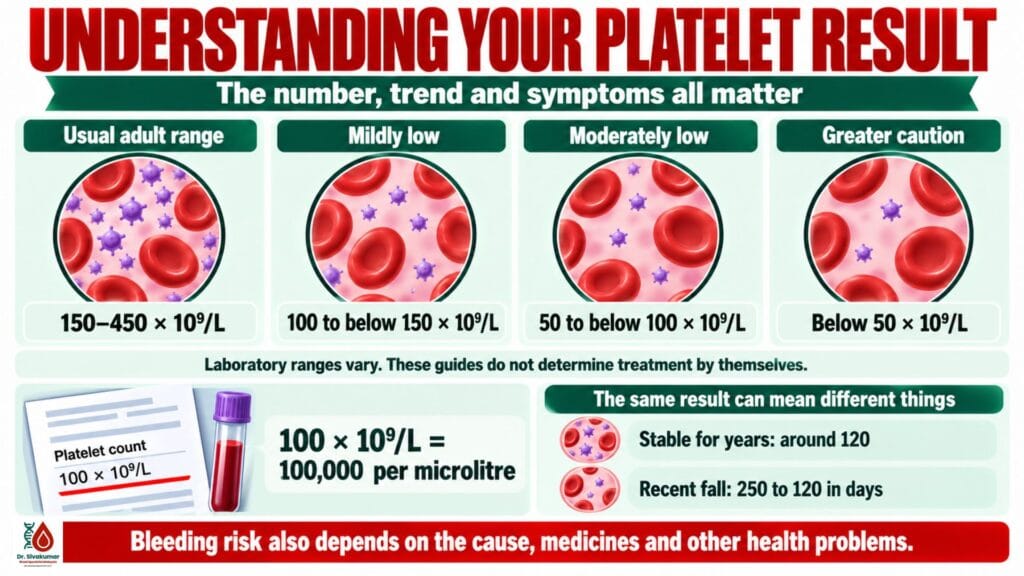
The usual adult range is approximately 150 to 450 × 10⁹/L, although laboratory ranges vary. This is equivalent to 150,000 to 450,000 platelets per microlitre. A result below 150 × 10⁹/L is generally considered low. Your doctor will interpret it alongside previous results, symptoms and other blood counts.
Is low platelet count dangerous?
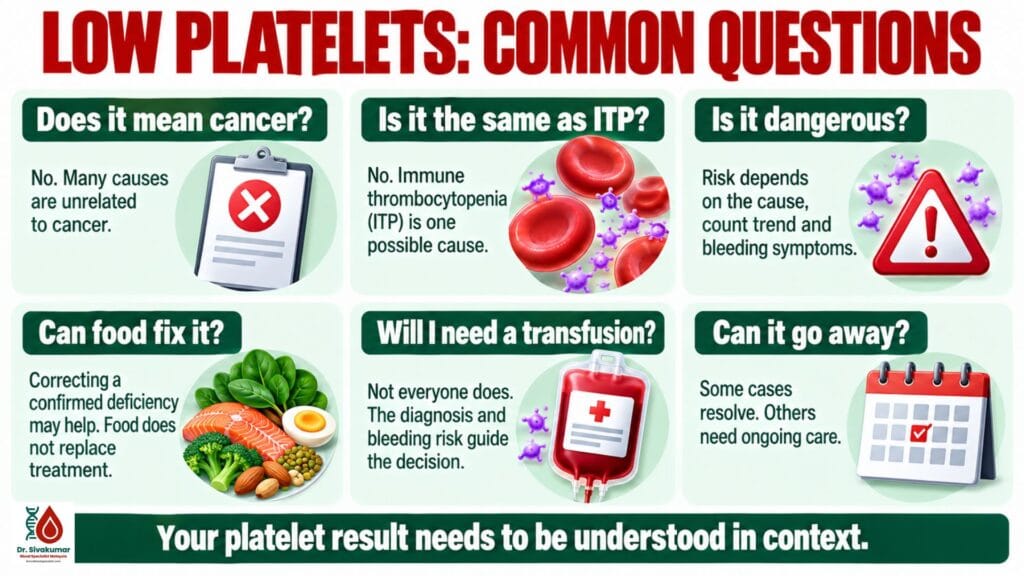
It can be, but a mildly low count without bleeding is very different from a rapidly falling count in someone who is unwell. Risk depends on the cause, severity, medicines and other health problems. Serious bleeding or a very low new result needs prompt assessment.
Does low platelet count mean cancer?
No. Many causes are unrelated to cancer. Blood cancers and bone marrow disorders are among the conditions doctors consider, especially when red or white blood cells are also abnormal. A low platelet result alone cannot diagnose leukaemia or another cancer.
Is thrombocytopenia the same as ITP?
No. Immune thrombocytopenia, or ITP, is one cause of low platelets. It occurs when the immune system mistakenly targets platelets and can also impair their production. Thrombocytopenia is the broader term covering low counts from many different causes.
Can food increase my platelet count?
Correcting a confirmed vitamin B12 or folate deficiency may help when that deficiency is responsible. However, food does not replace treatment for immune, infectious or bone marrow causes. Discuss supplements and herbal products with your doctor before taking them.
Will I need a platelet transfusion?
Not necessarily. Transfusions are used in specific circumstances, including serious bleeding, selected procedures or certain very low counts caused by reduced production. They are not routinely needed for every low result. The diagnosis matters when deciding whether a transfusion will help.
Can thrombocytopenia go away?
Some cases improve when an infection settles or a responsible medicine is withdrawn under medical supervision. Other causes require ongoing care. Recovery cannot be predicted from the platelet number alone, so follow-up is important even if you feel well.
When Should You See a Haematologist About Low Platelets?
Your usual doctor may arrange a repeat blood test and initial investigations. Referral to a haematologist is appropriate when the cause is unclear, the count remains low or the findings suggest a blood disorder.
Specialist assessment is particularly important if:
- Your platelet count is falling or repeatedly below the laboratory range.
- You have unexplained bruising or recurrent bleeding.
- Other blood counts or the blood film are abnormal.
- You have enlarged lymph nodes, an enlarged spleen or unexplained weight loss.
- A low count complicates pregnancy, planned surgery or treatment with blood-thinning medicines.
- You have suspected ITP or another condition needing specialist treatment.
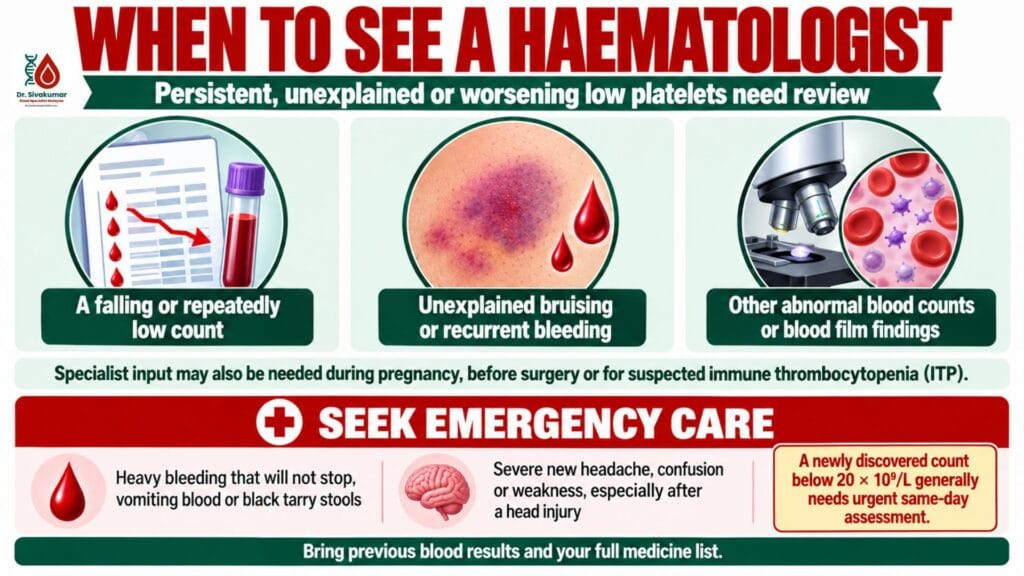
Bring your current and previous blood results, referral letter and a complete medicine list. Include non-prescription products, vitamins and traditional remedies. Older results can show whether this is a recent change or a longstanding pattern.
When you should seek emergency care
Go to the nearest emergency department if bleeding is heavy or will not stop with firm pressure. Vomiting blood, black tarry stools, a severe new headache, confusion, weakness or neurological symptoms after a head injury also require urgent assessment. Do not wait for a routine clinic appointment.
A newly discovered count below 20 × 10⁹/L generally warrants urgent same-day medical assessment, even without obvious bleeding. A count below 10 × 10⁹/L is particularly concerning. Follow urgent instructions from the laboratory or treating doctor, whatever the count.
Understanding Your Platelet Count in Your Blood Test Results
Your platelet result needs to be understood in context. The number, changes over time and the other findings on your blood report help your doctor assess what it means for you.
What the numbers on your blood report mean
Malaysian laboratory reports commonly express platelet counts in × 10⁹/L. For example, a result of 100 × 10⁹/L means 100,000 platelets per microlitre. Comparing results in different units can otherwise make the change seem larger or smaller than it is.
Doctors often describe counts of approximately 100 to below 150 × 10⁹/L as mildly low, and 50 to below 100 × 10⁹/L as moderately low. Counts below 50 × 10⁹/L deserve greater caution, particularly with injury or invasive procedures. These categories provide context; they do not determine treatment by themselves.
Why the trend matters
Someone whose count has stayed near 120 for years may need a different assessment from someone whose count has dropped from 250 to 120 over several days. Both results fall below the usual range, but the second represents a substantial recent change.
The doctor also checks whether haemoglobin and white blood cells are normal. An isolated platelet reduction gives different clues from a reduction in several blood cell types. The aim is to understand the pattern rather than respond to one number in isolation.
Platelet count and bleeding risk are not identical
People with counts above 50 × 10⁹/L often have little spontaneous bleeding. Risk generally increases as the count falls, particularly below 20 and 10 × 10⁹/L. However, these are approximate guides, not guarantees. Medicines affecting platelet function, kidney disease and other clotting problems can change the risk.
Some disorders involving low platelets can also cause dangerous blood clots. This is one reason the cause must be established before deciding on treatment.
Symptoms and Warning Signs of Low Platelet Count
Low platelets may first become noticeable through unusual bruising or changes in bleeding. The signs can vary, so it helps to recognise what is different from your usual pattern.
Bruising and small spots on the skin
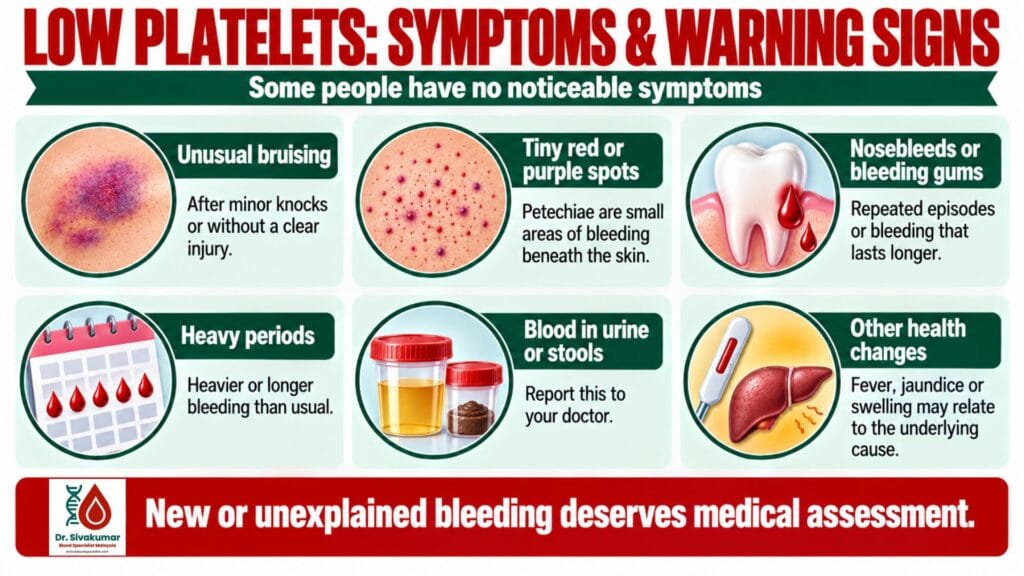
Unusual bruising may occur after minor knocks or without an obvious injury. Small red or purple spots called petechiae can appear when tiny amounts of blood leak beneath the skin. Larger areas of discolouration may be called purpura.
These signs can have other causes. Their presence should prompt assessment, especially if they are new, widespread or associated with bleeding elsewhere.
Nosebleeds and bleeding gums
Repeated nosebleeds, gum bleeding or bleeding that lasts longer than expected after a small cut can indicate a platelet problem. Let your doctor know how often this happens, how long it lasts and whether pressure stops it.
Dental disease can also cause gum bleeding. A dental explanation does not automatically account for a low platelet result, so both issues may need attention.
Heavy periods and other bleeding
Periods that become much heavier or last longer than usual deserve medical attention. Report blood in the urine or stools as well. Persistent blood loss can lead to anaemia, causing tiredness, dizziness or breathlessness.
Symptoms of the underlying condition
Fever, joint symptoms, jaundice or abdominal swelling may point towards the cause rather than the platelet reduction itself. Fatigue is also not specific to thrombocytopenia. Tell your doctor about the full picture, including recent illness and changes in general health.
Some people have no symptoms at all. Feeling well does not remove the need to review an abnormal result, but it is useful information when assessing urgency.
Causes and Risk Factors of Thrombocytopenia
Platelets are made in the bone marrow, the soft tissue inside bones. Once a genuinely low count is confirmed, assessment focuses on the illnesses, exposures or medicines that could explain it.
Reduced platelet production
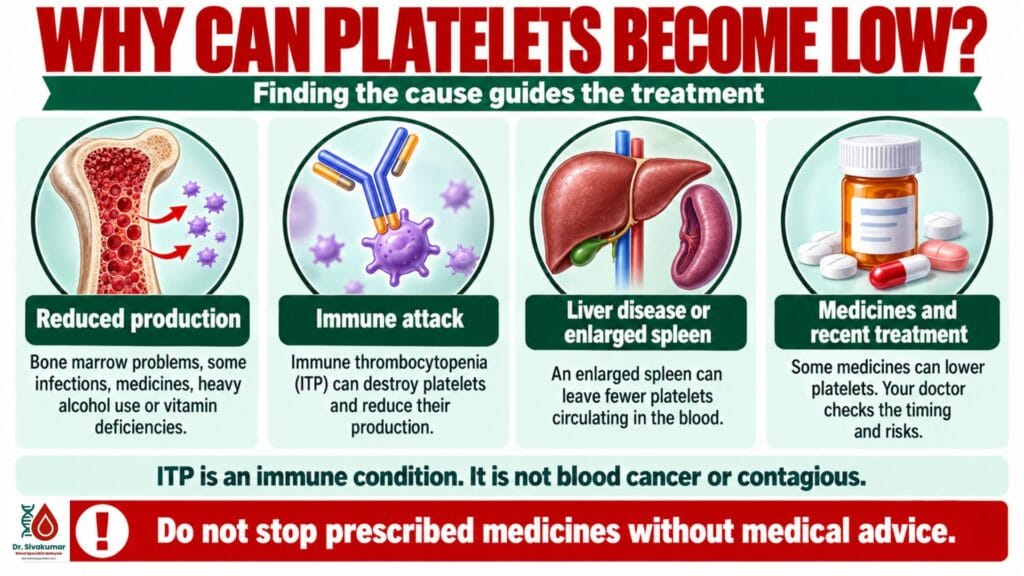
The bone marrow may produce fewer platelets because of certain infections, heavy alcohol use, nutritional deficiencies or medicines such as chemotherapy. Aplastic anaemia, myelodysplastic syndromes and blood cancers can also affect production. These conditions differ greatly in seriousness and treatment.
Investigations help distinguish a reversible problem from a disorder needing more detailed assessment. Your doctor may pay particular attention to the other blood cells and their appearance under the microscope.
What is immune thrombocytopenia or ITP?
ITP stands for immune thrombocytopenia. It is an immune condition in which the body’s defence system mistakenly attacks its own platelets. The platelets are removed from the bloodstream faster than they should be. The immune response can also interfere with the bone marrow’s ability to make replacement platelets.
As a result, the platelet count falls, which can increase bruising and bleeding. Some people with ITP have no symptoms and discover it through a blood test. ITP is not a blood cancer and is not contagious.
Thrombocytopenia describes any low platelet count. ITP is one specific cause, so the two terms should not be used interchangeably. It may occur on its own or alongside another condition. Other immune causes of low platelets include reactions to certain medicines.
An immune cause does not mean that your immune system is generally weak. It means that part of its response is directed at the wrong target. This explains why some ITP treatments reduce the immune attack, while others help the body produce more platelets.
Liver disease and an enlarged spleen
Chronic liver disease can contribute to low platelets through several mechanisms, including an enlarged spleen. The spleen normally stores some platelets, but enlargement can leave fewer circulating in the bloodstream. Assessment may therefore include liver tests and an abdominal ultrasound.
Medicines and recent treatment
Your doctor will review when each medicine was started and whether the count changed afterwards. Certain antibiotics, anti-seizure medicines and cancer treatments can be relevant. Do not stop prescribed treatment yourself; the risks of continuing and stopping need to be weighed.
Heparin-induced thrombocytopenia, or HIT, is a serious reaction to heparin, a medicine used to prevent or treat clots. It can increase clotting risk despite lowering the platelet count and needs urgent specialist management.
Risks of Untreated Thrombocytopenia
The risks depend on the diagnosis and bleeding tendency. A stable, mildly low count may need monitoring rather than medicine. Monitoring recommended by your doctor is different from leaving an unexplained or worsening condition unassessed.
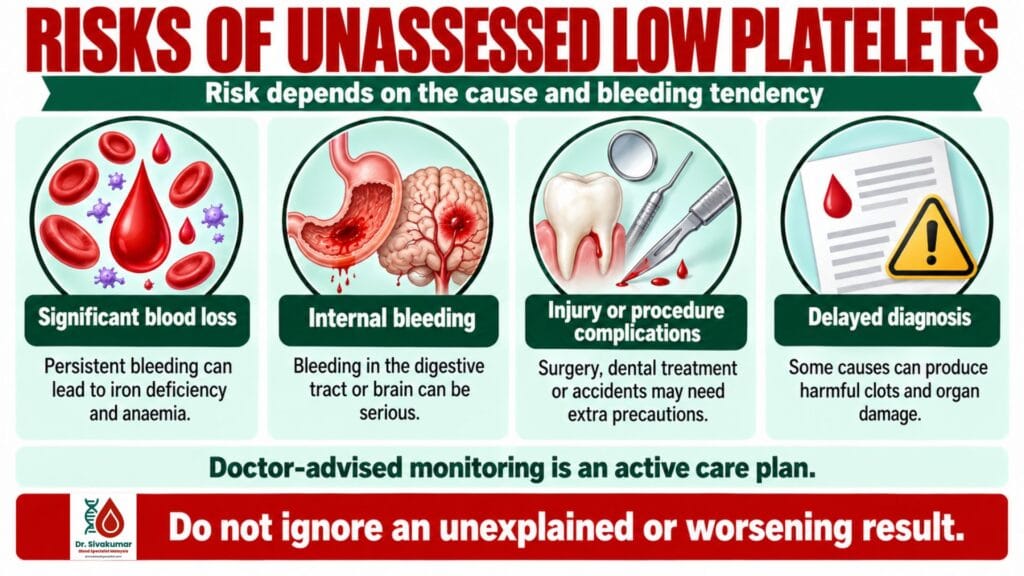
Significant bleeding and blood loss
When platelets are very low, bleeding may occur without a major injury. Persistent bleeding from the nose, gums or digestive tract can become difficult to control. Heavy menstrual bleeding can also cause substantial blood loss.
Repeated blood loss may lead to iron deficiency and anaemia, reducing energy and exercise tolerance. A person may gradually adjust to feeling tired and underestimate how much bleeding is affecting their health.
Internal bleeding
Bleeding inside the body may be harder to recognise than a visible bruise. Gastrointestinal bleeding can cause black stools or vomiting blood. Bleeding in the brain is uncommon but potentially life-threatening. The emergency symptoms described earlier require immediate assessment rather than waiting for the next blood test.
Complications during procedures or injury
An unrecognised platelet problem may increase bleeding during surgery, dental treatment or after an accident. Informing the treating team allows them to check the count and plan any precautions. The required platelet level varies with the procedure and the person’s other risks.
Delayed treatment of the underlying disease
Ignoring the result may also delay recognition of a condition that needs its own treatment. The consequences of TTP or HIT, for example, include harmful blood clots and organ damage. These are risks of the underlying disorders, rather than effects of the low count alone.
The purpose of assessment is therefore broader than preventing bleeding. It is to identify which patients can safely be monitored and which need treatment for a potentially serious cause.
Low Platelets and Dengue in Malaysia
Dengue is one possible explanation for a falling platelet count during a fever. Understanding this connection helps explain why doctors monitor your symptoms and overall condition alongside your blood results.
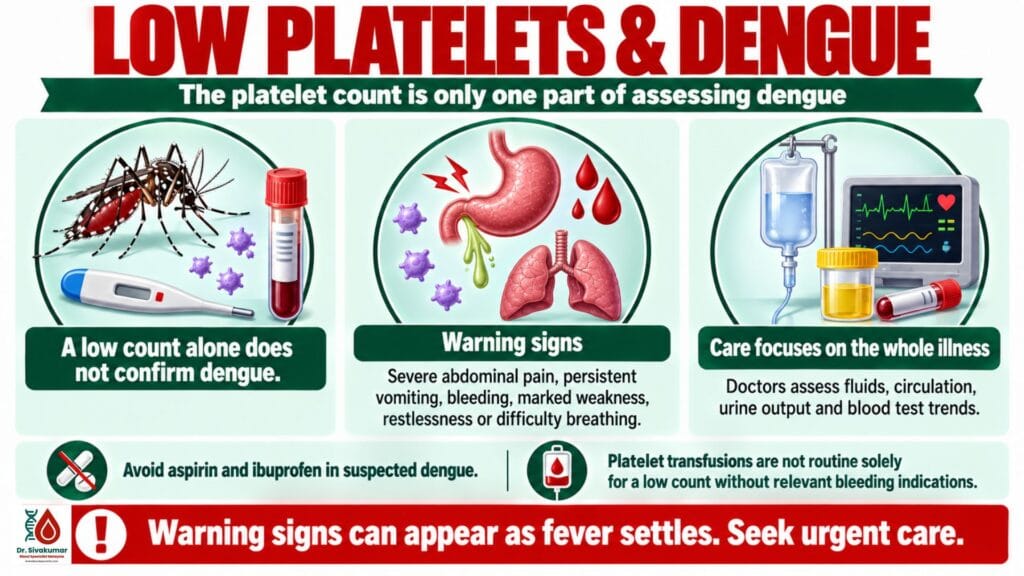
A low platelet count does not confirm dengue
Dengue is an important consideration when a person develops fever and a falling platelet count. However, not every low count is due to dengue. Diagnosis depends on symptoms, examination and appropriate testing, including the timing of illness.
Warning signs can appear as fever settles
Seek urgent care for severe abdominal pain, persistent vomiting, bleeding, marked weakness, restlessness or difficulty breathing during suspected dengue. Deterioration can occur when the fever begins to settle, so a lower temperature does not necessarily mean recovery.
Doctors assess hydration, circulation, urine output and blood test trends. The platelet count is only one part of determining severity and deciding whether hospital monitoring is needed.
Treatment focuses on the whole illness
Dengue care includes careful fluid management and monitoring for complications. Routine platelet transfusions solely to correct a low count are not recommended in patients without relevant bleeding indications. Aspirin and ibuprofen should be avoided in suspected dengue because they can increase bleeding risk.
If platelets remain low after recovery, the result should be reassessed rather than automatically attributed to the previous infection.
Low Platelet Count During Pregnancy
A low platelet result during pregnancy can be worrying for an expectant mother. Its significance depends on the stage of pregnancy, the degree of reduction and whether other health concerns are present.
Gestational thrombocytopenia
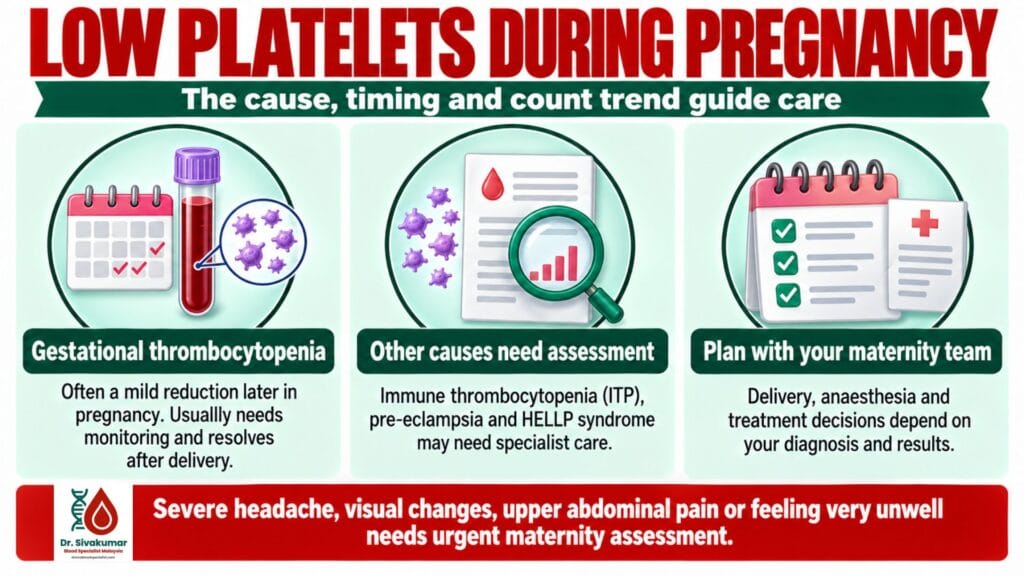
Some women develop a mild platelet reduction during pregnancy, often later in pregnancy. This is called gestational thrombocytopenia. It usually causes no problems for the mother or baby, requires monitoring rather than treatment and resolves after delivery.
When further assessment is needed
Other causes include ITP and serious pregnancy complications such as pre-eclampsia or HELLP syndrome. A low result should therefore be interpreted by the maternity team, with haematology input where needed.
Severe headache, visual changes, upper abdominal pain or feeling very unwell during pregnancy needs urgent maternity assessment. Do not assume these symptoms are explained by a harmless platelet reduction.
The team will also plan for delivery and any procedure requiring a particular platelet level. Decisions about anaesthesia and treatment depend on the diagnosis, count trend and individual circumstances.
Diagnosis and Tests for Thrombocytopenia
Investigating thrombocytopenia involves confirming the result and finding its cause. Your symptoms, medical history and initial blood findings guide which further tests are needed.
Confirming that the count is genuinely low
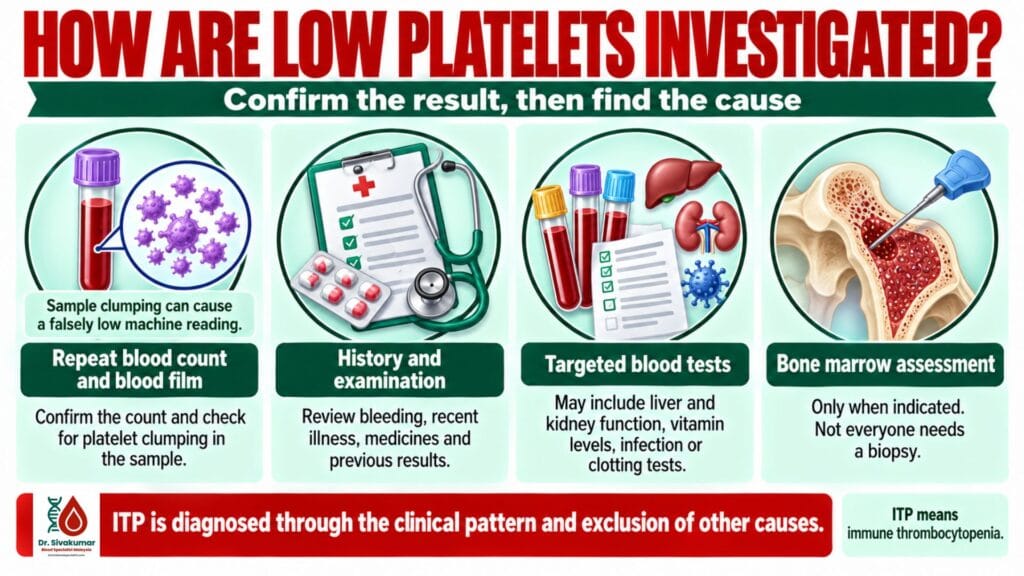
The first step may be a repeat full blood count and a peripheral blood film. Occasionally, platelets clump together in the collection tube, causing the machine to report a falsely low number. This is called pseudothrombocytopenia. Testing a fresh sample in a different tube can help confirm the true count.
This check is particularly useful when an unexpected result does not fit the clinical picture. It prevents unnecessary investigations or treatment based on a sample-related error.
Medical history and examination
The doctor asks about bleeding, recent fever, infections, medicines, alcohol intake, previous results and family history. Pregnancy, recent hospital admission and exposure to heparin may also be relevant. Examination looks for bleeding signs and evidence of liver, spleen or lymph node enlargement.
Blood tests selected for the likely cause
Depending on the findings, investigations may include:
- Repeat full blood count and blood film.
- Liver and kidney function tests.
- Vitamin B12 and folate levels.
- Tests for relevant infections, including hepatitis or HIV where appropriate.
- Clotting tests or tests for red blood cell breakdown.
- Selected immune tests or specialised tests for suspected platelet disorders.
Not every patient needs every test. A targeted investigation plan avoids unnecessary testing while addressing the most likely explanations.
Will you need a bone marrow biopsy?
Not everyone with thrombocytopenia needs a bone marrow examination. It may be appropriate when other blood counts are abnormal, the blood film raises concern or the diagnosis remains uncertain. In a typical presentation of ITP, it is often unnecessary.
If recommended, the doctor should explain what the test is looking for and how its result may change management.
How ITP is diagnosed
There is no single routine test that confirms every case of ITP. Doctors use the clinical pattern and exclude other causes. An isolated low platelet count may suggest ITP, but it should not be labelled as immune thrombocytopenia without an appropriate assessment.
Treatment Options for Low Platelet Count in Kuala Lumpur
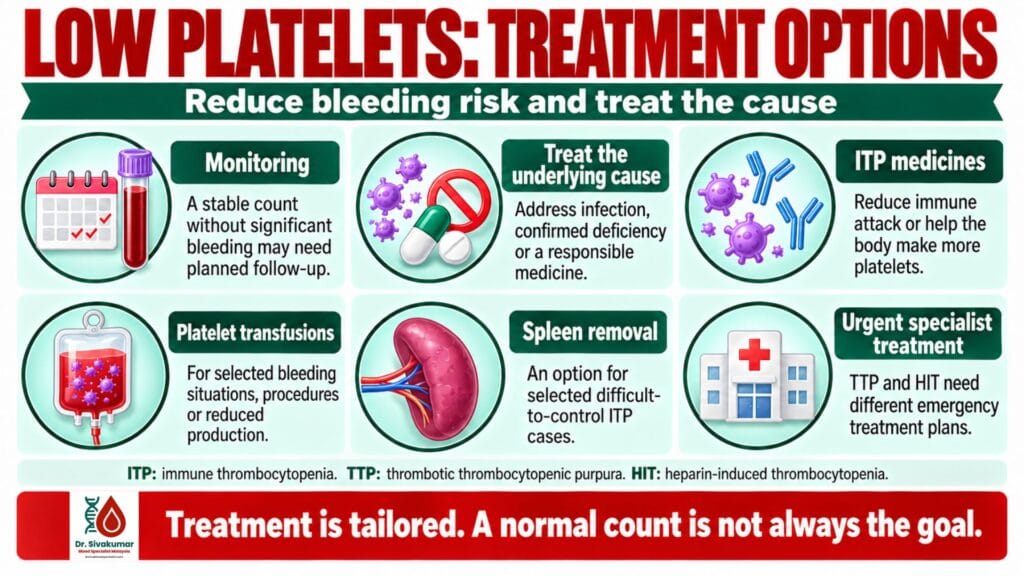
Treatment aims to reduce bleeding risk and address the cause. A completely normal count is not always necessary. The plan considers symptoms, count trends, other illnesses and any upcoming procedure.
Monitoring without immediate medicine
Some patients with a stable low count and no significant bleeding can be monitored. Observation includes an agreed blood test schedule, clear advice on warning signs and instructions about when to contact the treating team. It is an active care plan, rather than simply ignoring the result.
Treating the underlying cause
Management may involve correcting a confirmed deficiency, treating an infection or changing a responsible medicine. Liver disease and bone marrow disorders need treatment suited to their diagnosis. Steroids are not a general treatment for every cause of low platelets.
Medicines for immune thrombocytopenia
ITP treatment may include corticosteroids, intravenous immunoglobulin, rituximab or medicines that stimulate platelet production. The choice depends on how quickly a response is needed, bleeding risk, other health conditions, side effects and patient preference.
International guidance now includes combination approaches for some adults requiring initial treatment. For example, corticosteroids may be combined with rituximab or a platelet-production medicine. Availability and suitability vary, and the treating haematologist should explain the practical options.
When further therapy is needed, platelet-production medicines or rituximab may be considered, with other treatments available for selected patients. Long courses of steroids can cause problems, including raised blood sugar, blood pressure changes and sleep disturbance. Follow the prescribed plan and do not change or stop steroids abruptly without medical advice.
Platelet transfusions and urgent treatment
Transfusions may be needed for severe bleeding or certain procedures. In selected patients whose marrow produces very few platelets, preventive transfusion may be appropriate. The thresholds differ by diagnosis and procedure; one rule cannot safely cover everyone.
In ITP, transfused platelets may be destroyed quickly. Life-threatening bleeding may require transfusion alongside treatment directed at the immune cause. This is managed urgently in hospital.
Spleen removal in selected cases
Splenectomy, surgery to remove the spleen, is an option for some patients with difficult-to-control ITP. It is generally delayed where possible to allow time for remission and consideration of medical treatments. Vaccination planning and advice about lifelong infection and clotting risks are essential.
Conditions requiring a different approach
Thrombotic thrombocytopenic purpura, or TTP, is a rare emergency involving small blood clots, low platelets and damage to red blood cells. It needs urgent specialist treatment, often including plasma exchange and medicines. HIT also requires a specific plan to control clotting risk. Neither should be managed as ordinary ITP.
Recovery and Living with Thrombocytopenia
Living with a low platelet count may involve follow-up appointments and some adjustments to daily life. A clear care plan helps you understand the precautions you need while continuing your usual routines where possible.
Follow-up and treatment response
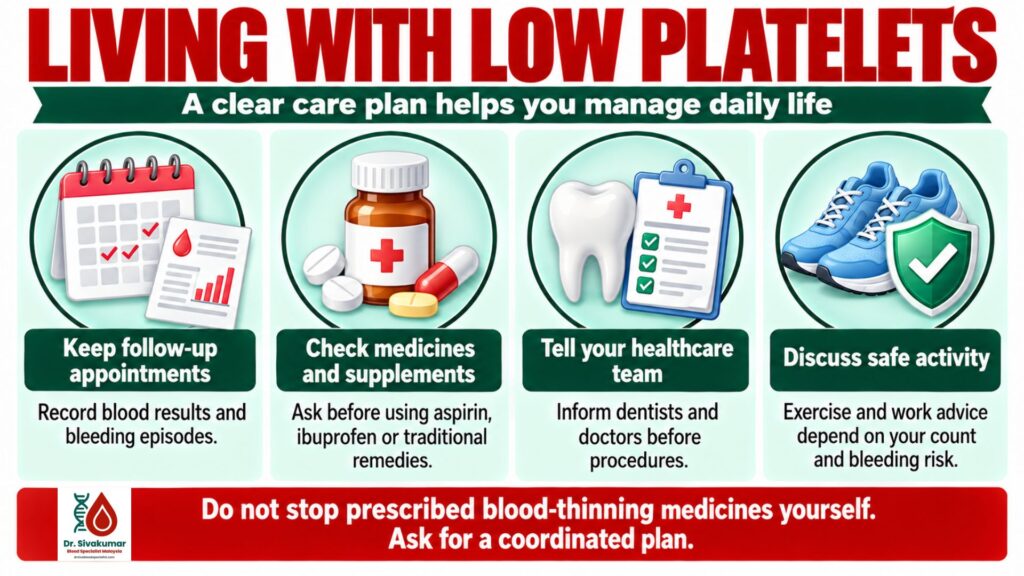
Follow-up may continue after your count improves, particularly while medicines are being adjusted. Ask what platelet level is acceptable for you, when to repeat testing and which changes should trigger an earlier review.
Keep a record of results and any bleeding episodes. Treatment response is easier to assess when the team can compare symptoms and counts over time.
Medicines and daily precautions
Check before using aspirin, ibuprofen or other medicines that may increase bleeding. If you already take prescribed antiplatelet or anticoagulant treatment, ask the prescribing doctor for a coordinated plan rather than stopping it yourself. Disclose supplements and traditional remedies as well.
Tell your dentist and any doctor arranging a procedure about the low count. Gentle oral care and precautions against cuts or falls may help. Your team can advise which adjustments are worthwhile for your particular level of risk.
Work and exercise
Many people continue ordinary routines, but activities involving collisions, falls or injury may need to be restricted. Advice depends on the count, cause and bleeding history. Discuss exercise and physically demanding work with your doctor, particularly when counts are very low.
Restrictions should be specific enough to follow. Ask what you can safely do and when the advice will be reviewed as your condition improves.
Dr Sivakumar’s Advice on Low Platelet Count
My advice is to ask what is causing the low count and what the care plan is intended to achieve. You should leave a consultation understanding whether the next step is investigation, monitoring or treatment, and why that approach suits you.
If monitoring is recommended, ask for a clear follow-up plan. Know when your next blood test is due and which symptoms require urgent care. If treatment is needed, ask about its purpose, likely side effects and how we will assess whether it is working.
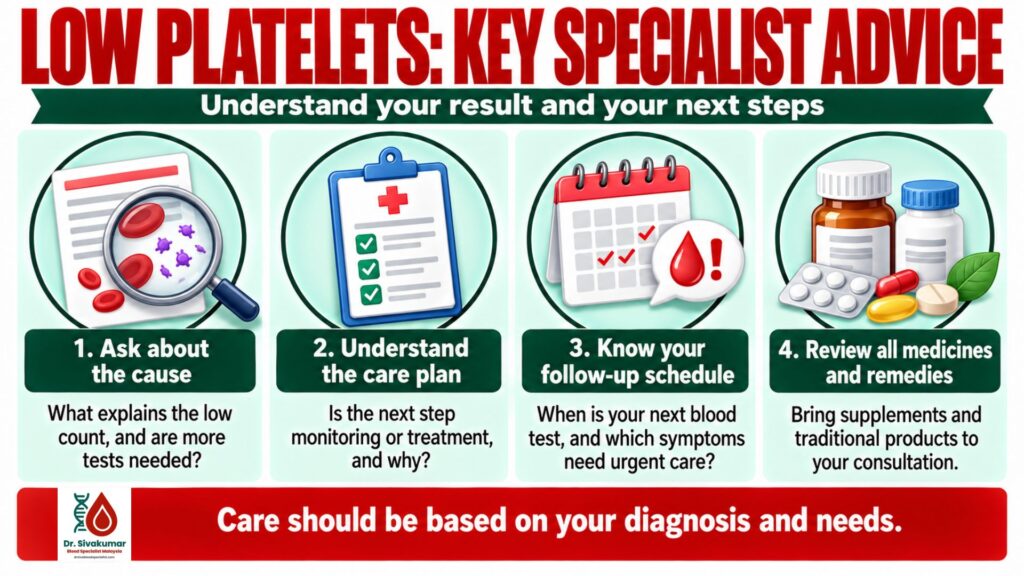
Avoid trying to correct the result with supplements or traditional remedies before the cause has been established. Bring these products to your consultation so they can be reviewed alongside your prescribed medicines.
With the right assessment, we can explain what the result means for your daily life and plan care around your diagnosis and needs.
Book an Appointment with Dr Sivakumar Palaniappan
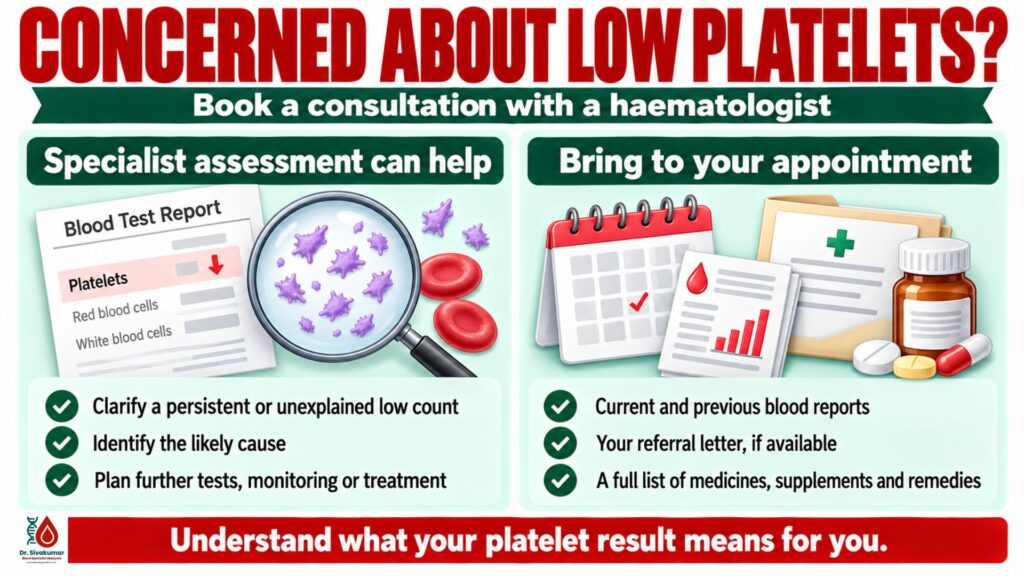
If you have a persistent or unexplained low platelet count, specialist assessment can help clarify the cause and your next steps. Dr Sivakumar Palaniappan is a Consultant Haematologist at Pantai Hospital Kuala Lumpur.
Bring your blood reports and medicine list to your appointment. You can request a consultation through the contact form on this website for personalised assessment of thrombocytopenia.
Contact & Request Appointment
Schedule a consultation with Dr. Siva by using the form below, calling his clinic or using the online booking button.
Appointment Form
Clinic Contact
Clinic: +603-2280 1169
Mobile: +6017-787 8293
Block A, Level 5, A539, 8, Jalan Bukit Pantai, 59100 Kuala Lumpur, Malaysia
Mon – Fri: 09:00 – 17:00
Sat: 09:00 – 13:00
Sun & Holidays: closed
Frequently Asked Questions

 English (UK)
 Bahasa Melayu
 தமிழ்
 Bahasa Indonesia
